
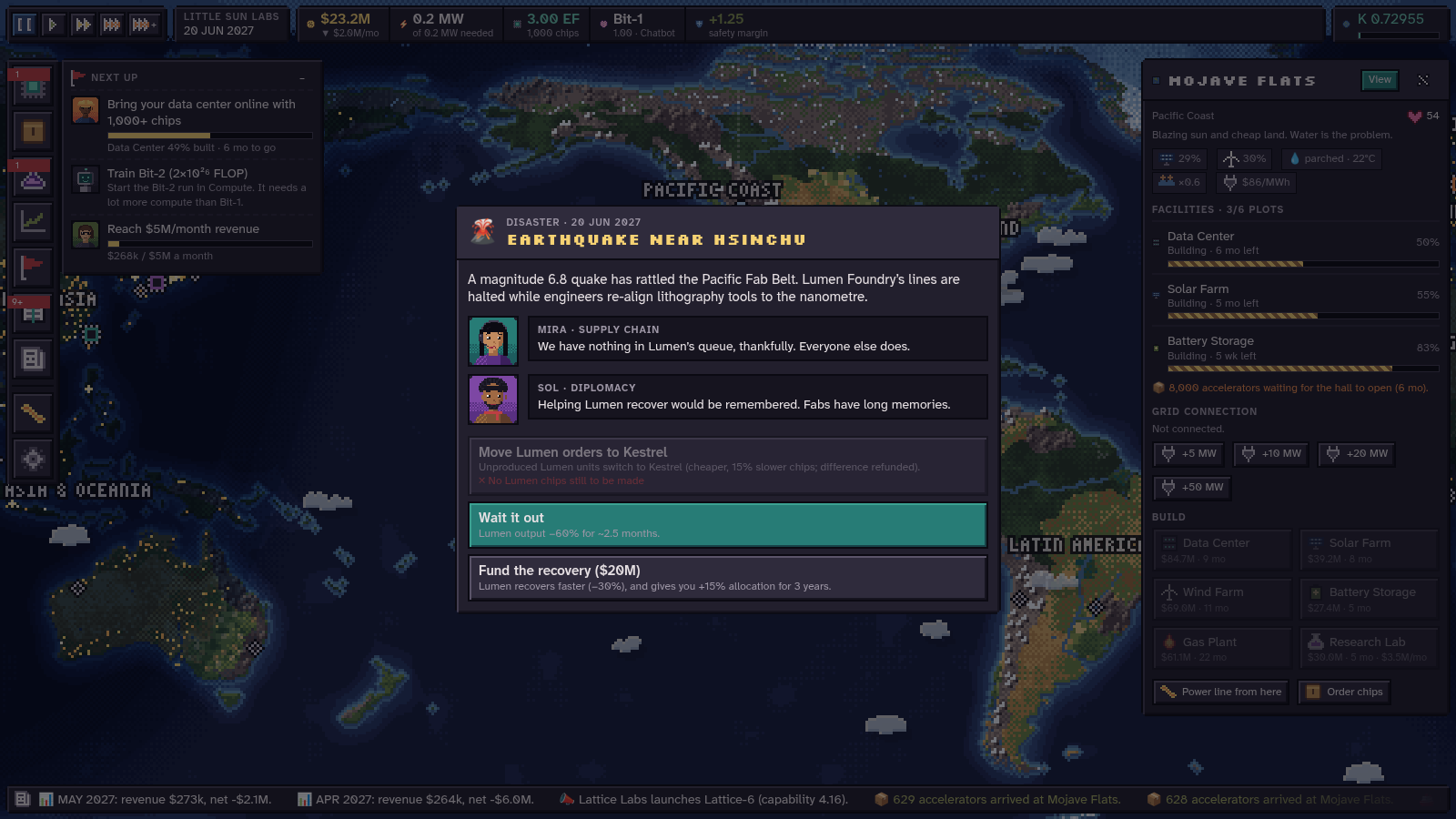
Real constraints, readable at a glance
A data hall really takes the best part of a year, a fab really needs ultrapure water, and the grid queue is real. Icons up front; the real units are a hover away.
A cozy-but-real pixel sim of the AI boom. Build power, chips and compute on a real Earth — and lift civilisation up the Kardashev scale.
Free · the whole campaign, Acts I–V, from a garage to Type I · desktop, Android and iPhone (landscape), installable as an app.

A management sim about the AI boom
You start in 2027 with a garage, a seed round and a tiny model called Bit. Rent compute, pour concrete, order chips that sail through real chokepoints and keep your models safe. Grow into a hyperscaler, then into the steward of a planet-wide project — and climb from Kardashev 0.73 to Type I.
A data hall really takes the best part of a year, a fab really needs ultrapure water, and the grid queue is real. Icons up front; the real units are a hover away.
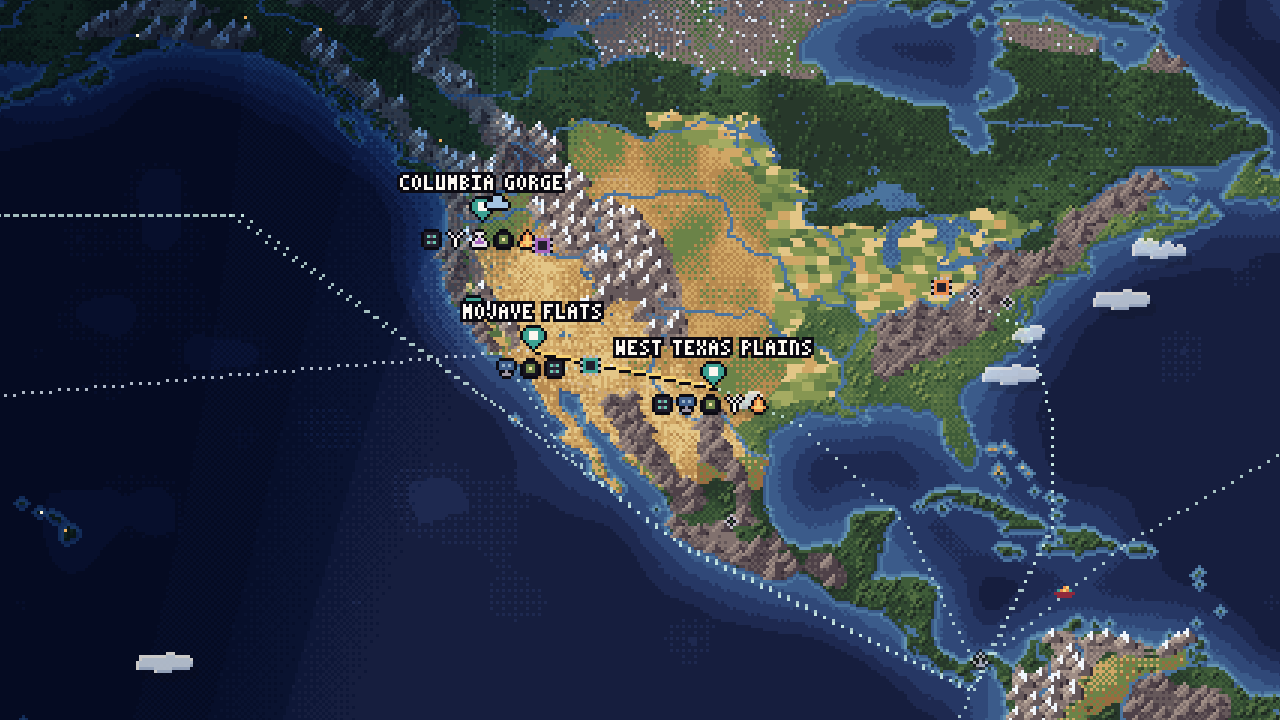
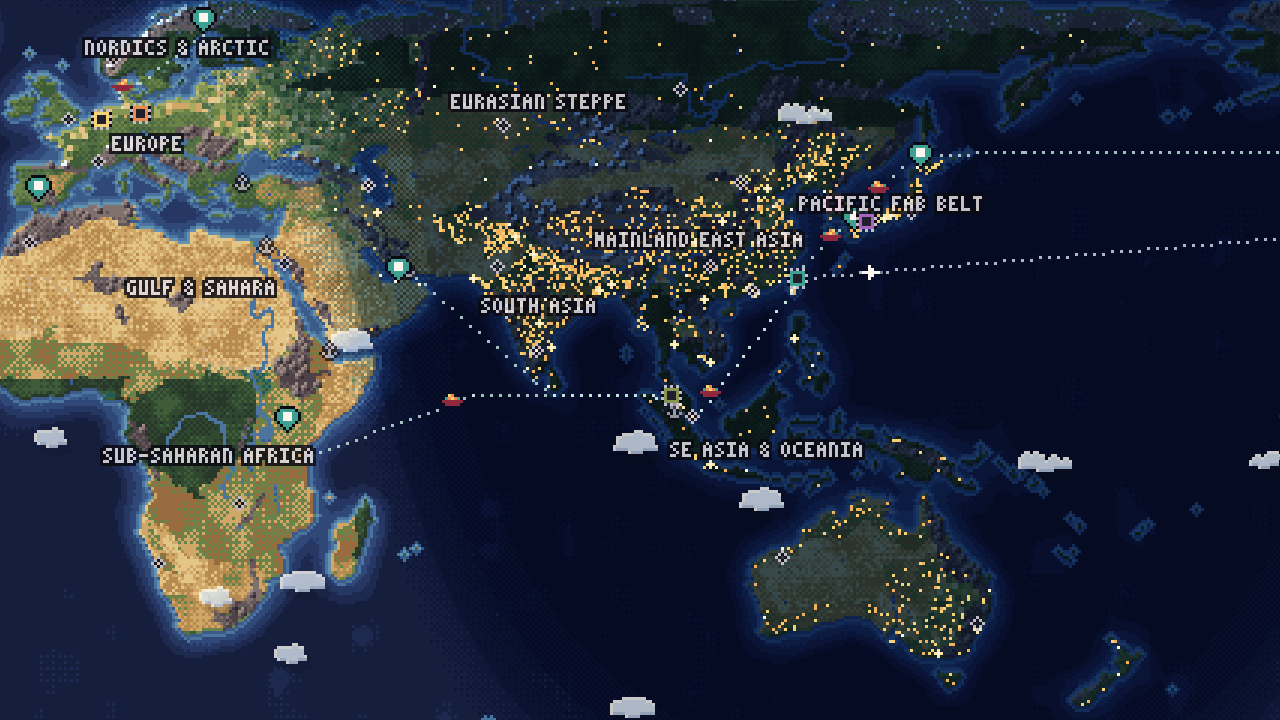
Sun in the Sahara, cold in the Nordics, fabs on the Pacific rim. Your chips sail through Malacca, Suez and Panama — and reroute when a strait closes.
Quakes, export controls, heatwaves, memory crunches and AI incidents. Every card is a trade-off, and your advisors don’t always agree.
When capability outruns alignment, incidents follow. Safety research also earns trust, permits — and the right to hand the wheel to an AI.
Exponential compute, learning-curve costs, offline progress and goals with progress bars. Coming back feels good.
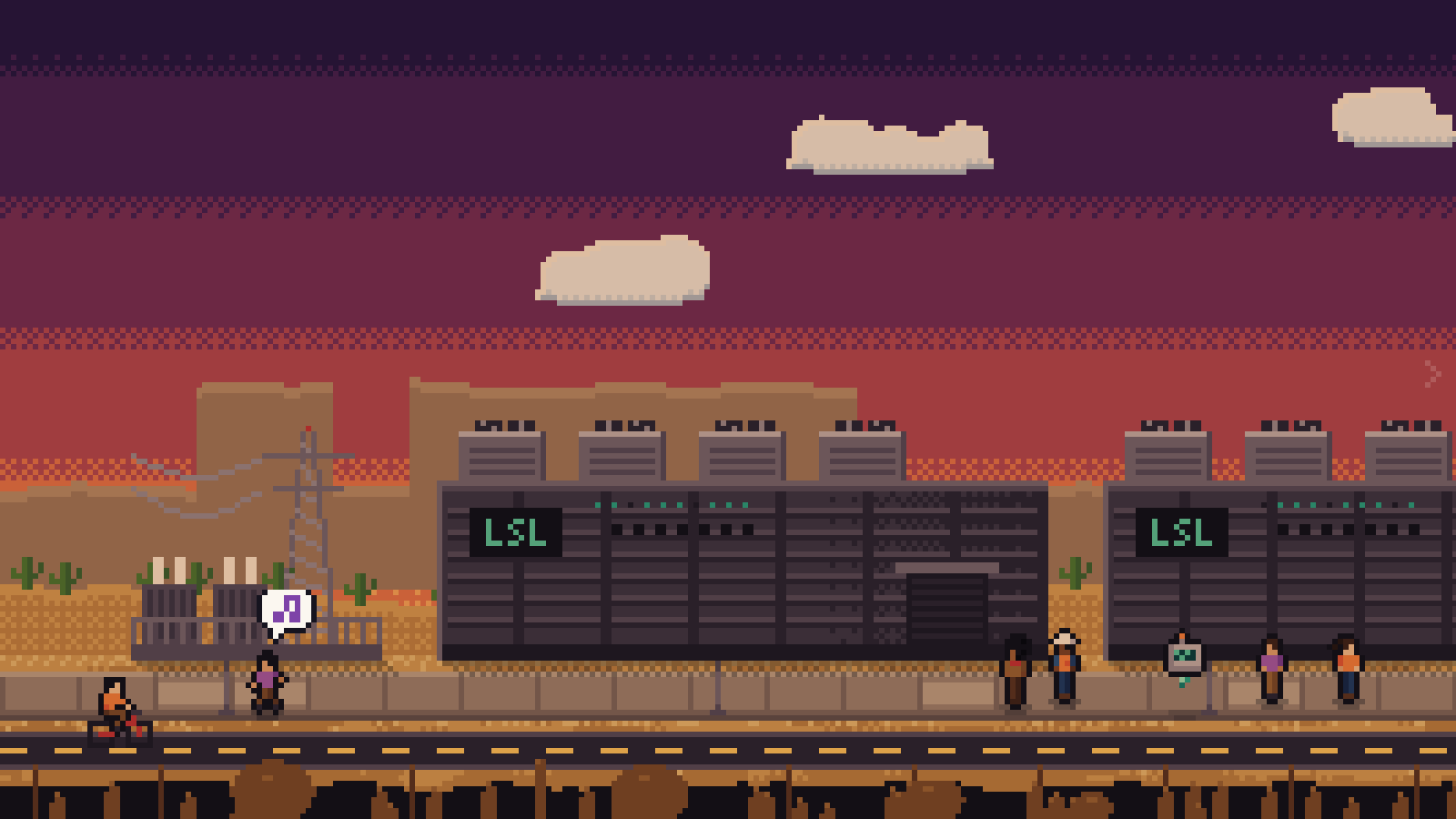
Zoom into any site: people, rain, night lights, a dog on the pavement — and advisors with opinions, ageing with you across seventy years.
The campaign · about 10–15 hours
Your role changes as you climb — and so does the game. Every act ends in a crisis you can actually lose.
I The Garage · 2027–29
Rent compute, train Bit-1, build your first data hall and fill it with chips before the seed money runs out. Keep the model safe, then raise your Series A.
II The Scale-Up · 2029–34
Gigawatt campuses, reactors and your own fab; supply deals, export rules and subsea cables; a board to answer to and rivals racing you to the frontier. Survive the Crunch and ring the IPO bell.
III The Charter · 2035–45
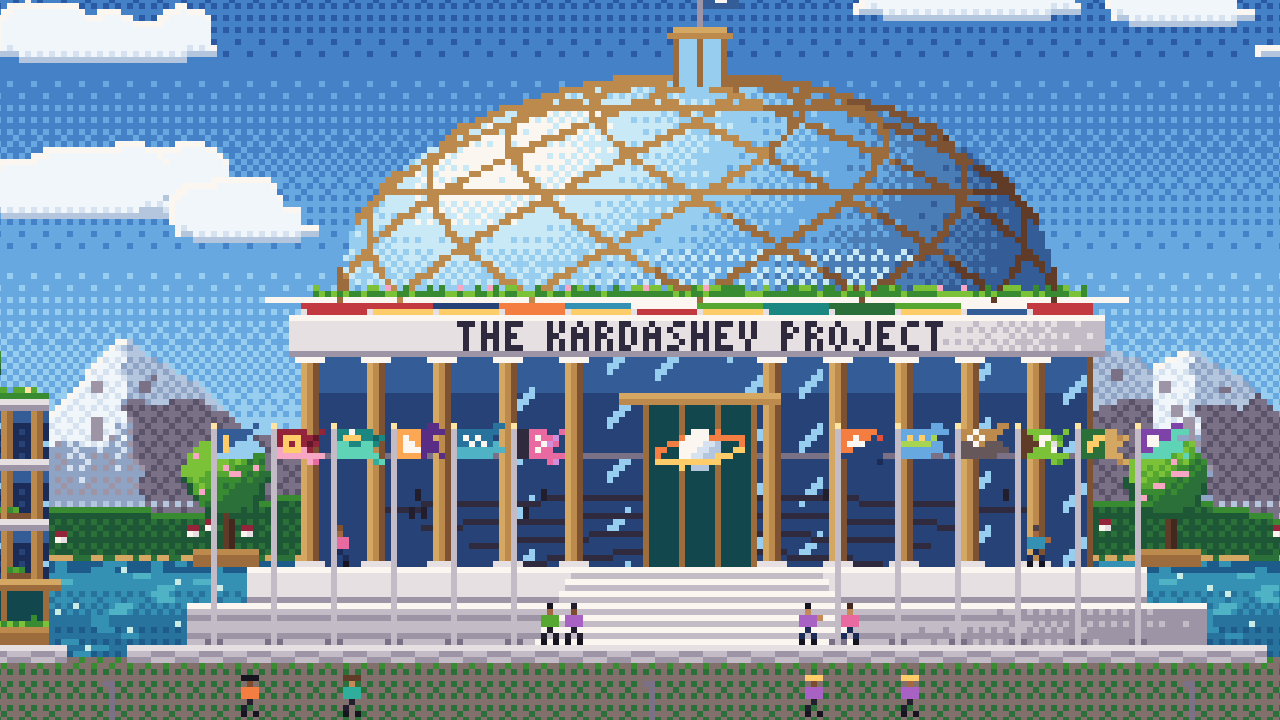
Twelve blocs found a planetary project and hand you the keys. Post contracts, judge bids from every company on Earth, win votes in the Council — and keep your hands off your own company’s bids. The renewal vote judges your decade.
IV Planetary · 2045–65
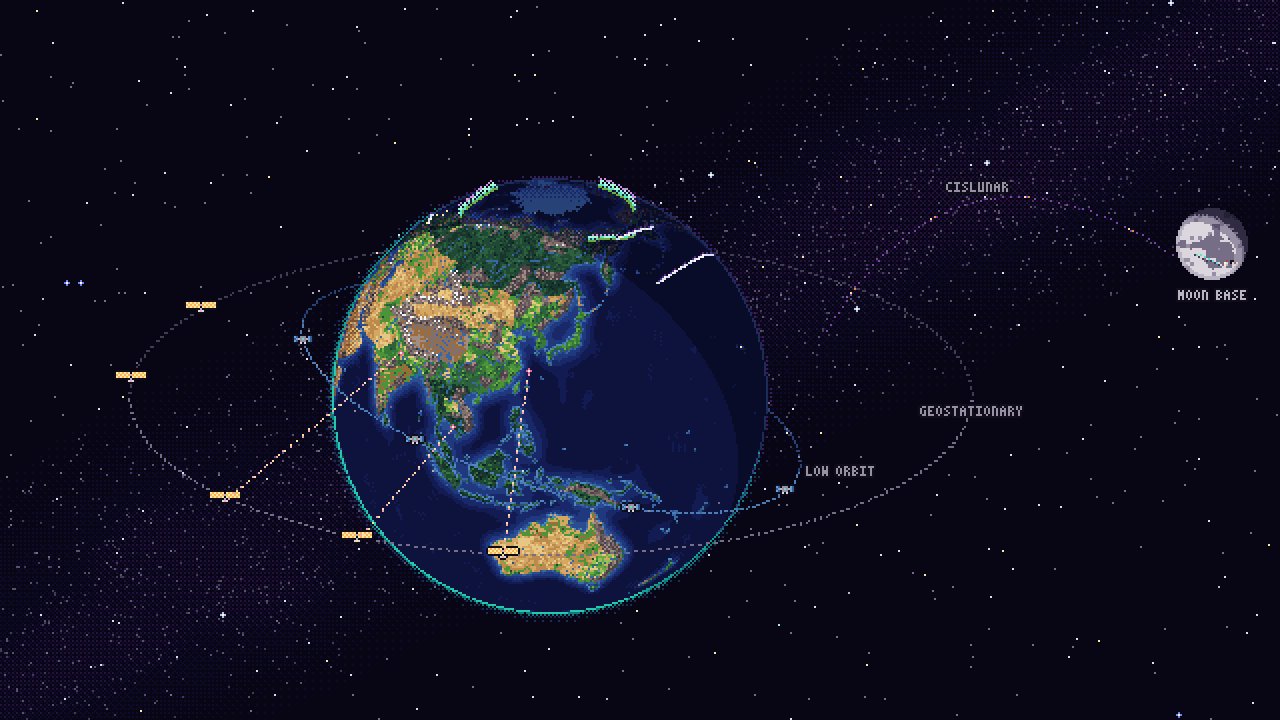
Wire the continents into one supergrid that follows the sun, race four fusion designs, hand provinces to AIs you trust and go to orbit and the Moon — in five-year plans and time-lapse jumps. Then comes the Heat Wall.
V Type I · 2068–
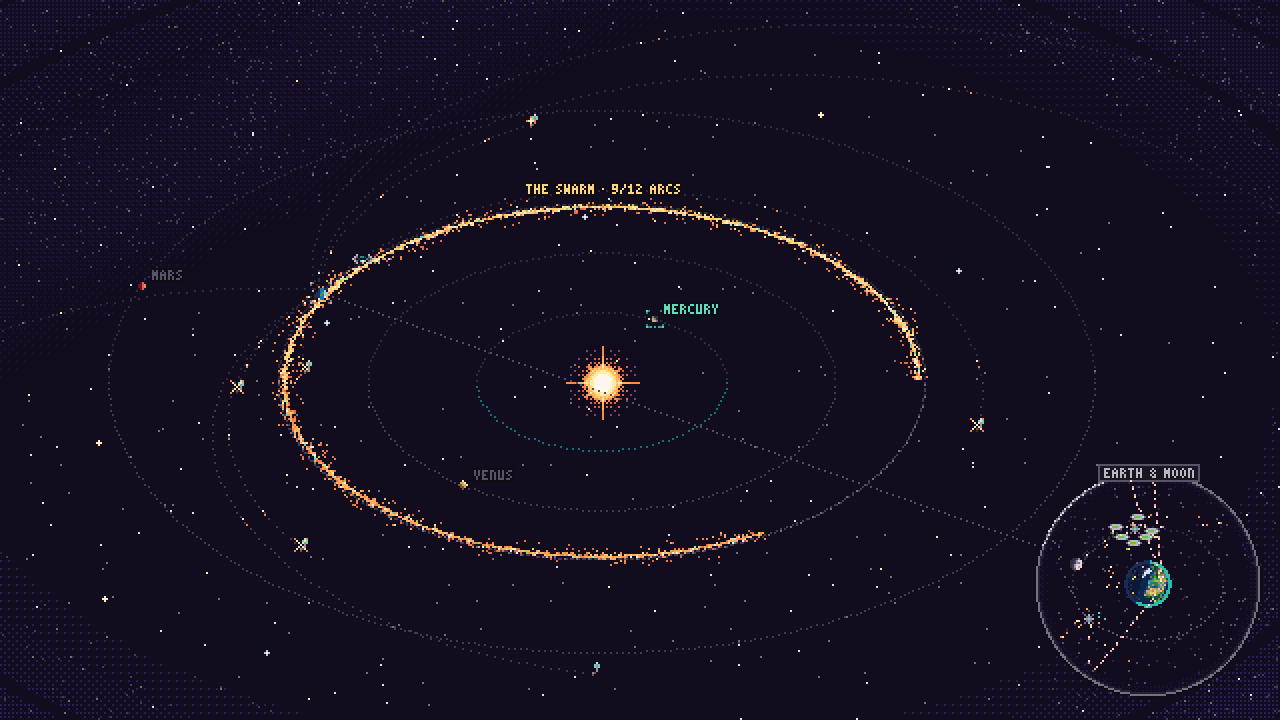
Earth can only shed so much heat. Seed self-replicating foundries on the Moon and real asteroids, ring the Sun with collectors, decide what the minds are owed — and ride out Solar Maximum to the last climb. Your score is the year you reach K 1.0000.
Screenshots
The art, the people, the weather and the music are all generated by the game itself. Click any shot to see it full size.
The score
In 1964 astronomer Nikolai Kardashev ranked civilisations by the power they command. Carl Sagan made it continuous:
K = (log₁₀ P − 6) / 10
Humanity runs on about 19.6 terawatts — K 0.729. A Type I civilisation harnesses 10 petawatts, around five hundred times more. AI is how you climb; energy is how you’re measured. Your score is the year you get there.
Free
Your saves stay on your device. Phones play in landscape.
No install, no account. Chrome, Edge, Firefox and Safari on desktop; phones and tablets in landscape.
Play nowIts own icon, full screen and offline play — on Android, iPhone and iPad, and desktop.
Windows, macOS and Linux builds that update themselves.
The builds aren’t code-signed yet, so your computer will ask before running them.
chmod +x) and run it (Arch-based distros may need the fuse2 package), or install the .deb on Debian and Ubuntu.Changelog
Start in a garage in 2027. See how far you get.
Play in your browser